

Assessing the economic impact of the meetings and events industry offers crucial insights into how this sector contributes to both national and regional economies. These analyses quantify the financial benefits generated by events such as business meetings, conferences, and exhibitions, while also highlighting their role in fostering economic growth and supporting various industries.
Poland has issued three comprehensive reports on this topic, reflecting the country’s commitment to understanding and maximising the industry’s economic potential.
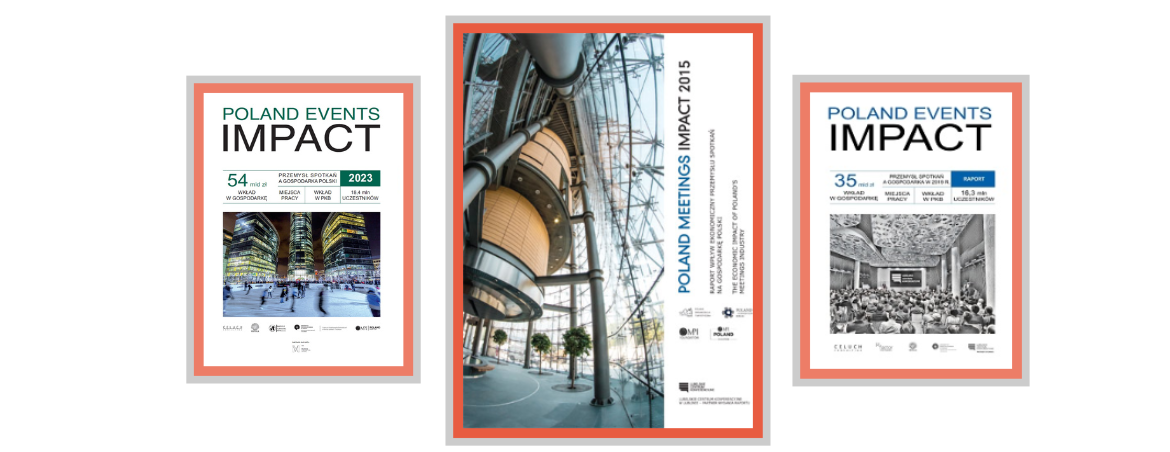
Poland Meetings Impact 2015
Poland Meetings Impact 2015 was the first in Poland, and the seventh in the world report on the economic impact of the meetings industry on the economy, illustrating the value of the meetings industry in Poland and what economic benefits arise from the organization of events (conferences, congresses, business meetings, corporate events, fairs or mega events), both for their organizers and for the economy.
Poland Meetings Impact research was conducted in three phases: 1 – participants expenditure analysis, 2 – analysis of the budget structure of meeting organizers, 3 – analysis of the budget structure of venues. Poland Meetings Impact assumes also analysis and statistics connected with meetings organizing in Poland, divided into regions. The project was carried out under the auspices of the MPI Foundation, the Polish Tourism Organization and MPI Poland.
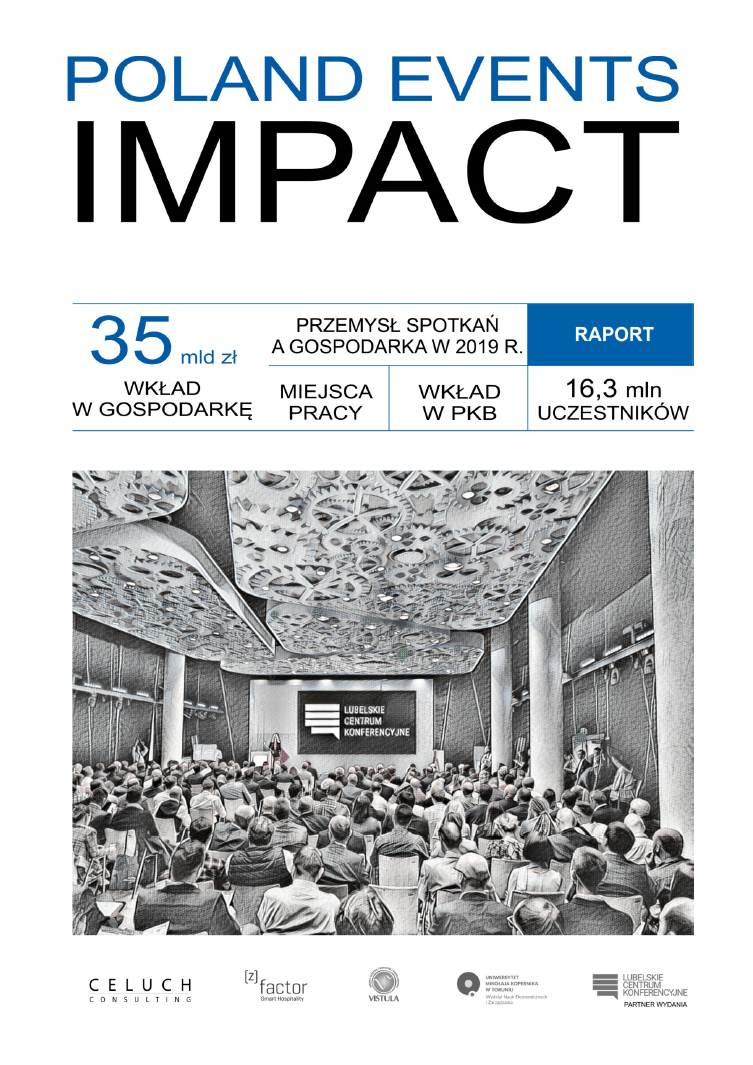
Poland Events Impact 2019
Poland Events Impact 2019 is Poland’s second attempt at defining the economic benefits stemming from event planning and was awarded the Honorary Patronage of President of Polish Tourism Organisation.
Report was compiled by a team of researchers and industry professionals supervised by Celuch Consulting, in cooperation with experts from the Faculty of Economic Sciences and Management of Nicolaus Copernicus University, Meeting Professionals International Poland Chapter and Vistula School of Hospitality. The list of authors also includes professors Barbara Neuhofer (Salzburg University of Applied Sciences) and Jolanta Żyśko (Vistula School of Hospitality), as well as Magdalena Kondas, Head of Vistula School of Hospitality’s Business Council.
The compiled results are based on data on 42,349 events staged in 2019 and an econometric model applying data of Statistics Poland and the Z-factor company, developed specifically for the purpose of defining the meetings sector’s impact on national economy. The research involved 90 meeting planners and 125 venue managers.
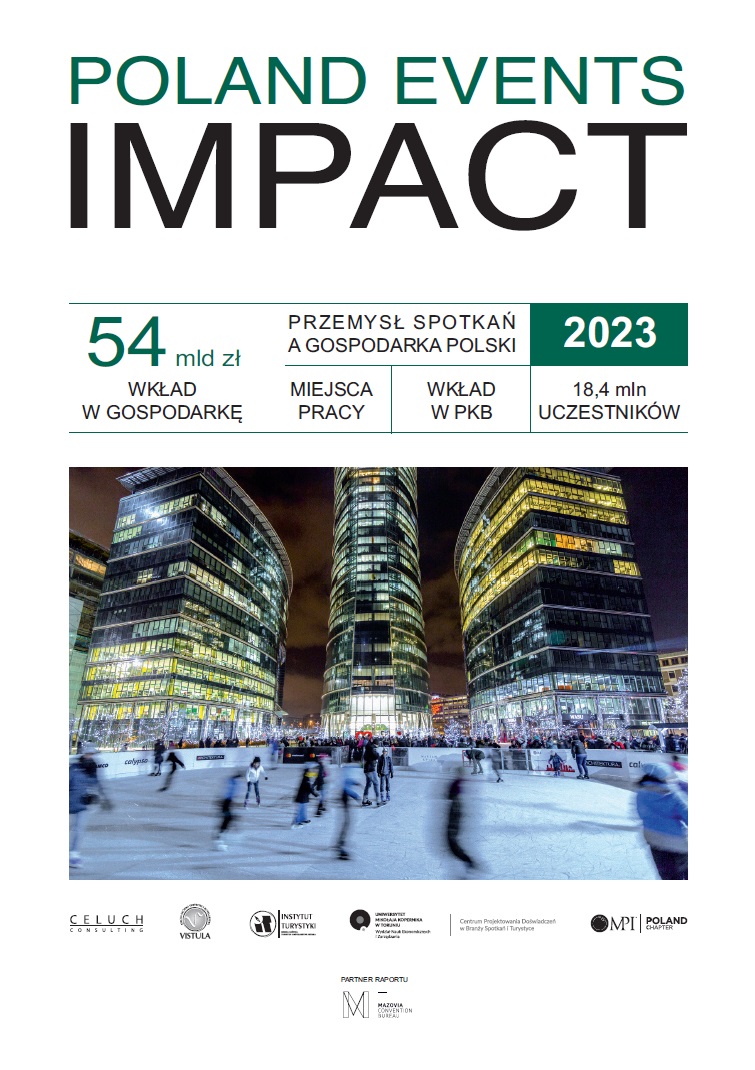
Poland Events Impact 2023
Economic impact analyses of the meetings industry on Poland’s economy have been conducted twice before – the 2015 study was presented in the “Poland Meetings Impact” report, while the 2019 study was covered in the “Poland Events Impact” report. This time, a team comprising academics and industry representatives has undertaken the challenge of assessing the economic impact of the meetings and events industry on a national scale. Once again, this presents a significant research challenge.
The organisers of the 2023 study on the economic impact of Poland’s meetings industry include Celuch Consulting (project leader), the Institute of Tourism and the Vistula School of Hospitality in Warsaw, the Experience Design Centre for the Meetings and Tourism Industry at the Faculty of Economic Sciences and Management of Nicolaus Copernicus University in Toruń, and Meeting Professionals International Poland Chapter. The project was conducted under the auspices of the Events Industry Council, MPI Foundation, and the Ministry of Sport and Tourism. It was further supported by industry associations, convention bureaus operating across Poland, led by the Poland Convention Bureau of the Polish Tourism Organisation, as well as industry media partners such as MeetingPlanner.pl, who provided media partnerships and numerous sponsorships.
The analysis would not have been possible without the support of Z-Factor, which developed a dedicated research tool for the study. The report’s partner is the Mazovia Convention Bureau (Mazovian Regional Tourism Organisation).
Countries that have previously conducted similar studies on the economic impact of meetings include Australia (2005), Canada (2006, 2009, and 2014), the USA (2009 and 2013), Mexico (2011), Denmark (2012), the United Kingdom (2013), and Poland (2015 and 2019).
Below are three reports available for download in PDF format.